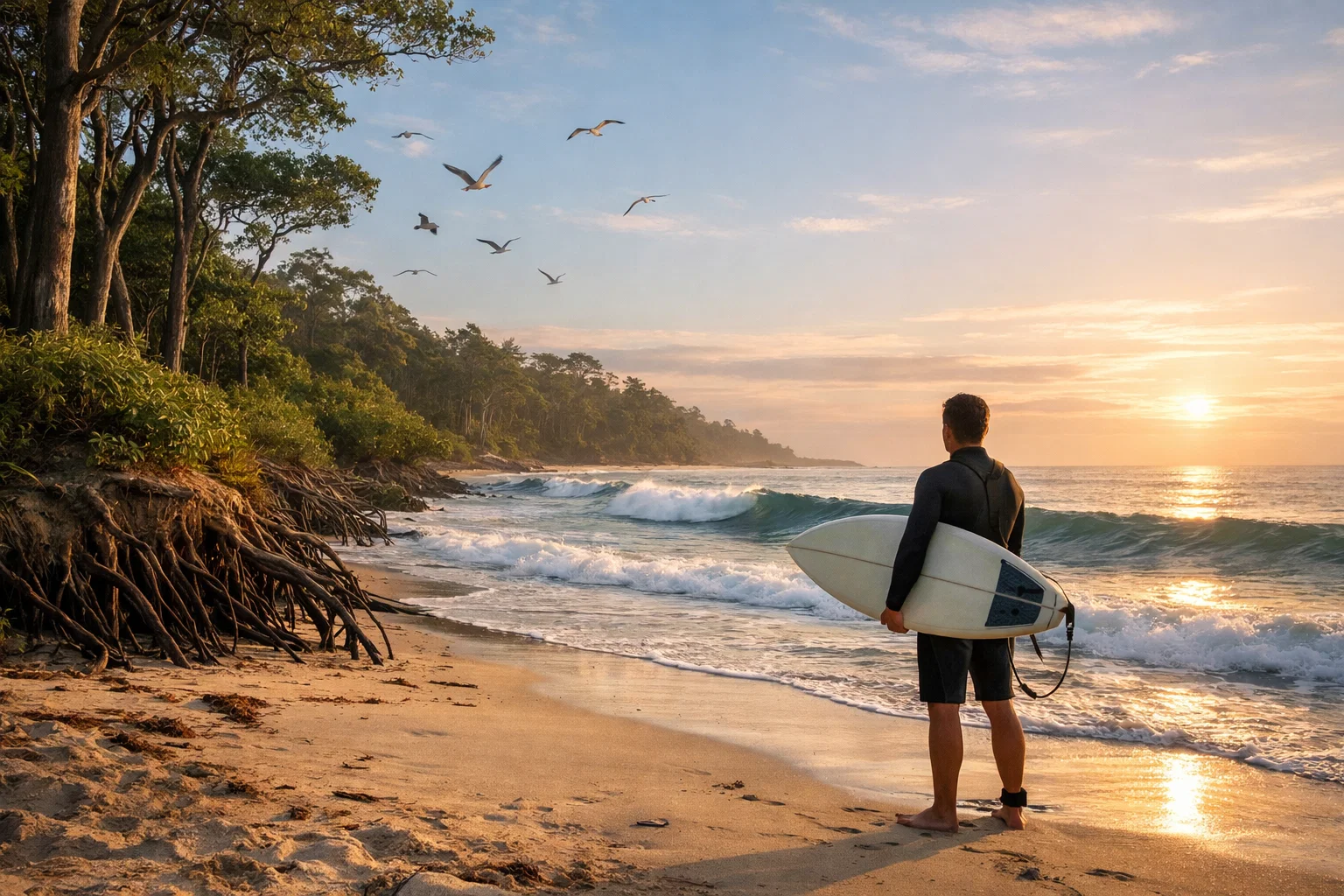
The perfect surf break is often viewed as a purely hydrographic phenomenon. Surfers study bathymetry, swell direction, and wind speed to predict when a reef or a sandbar will produce a clean barrel. However, the secret to a long-lasting and stable surf spot frequently lies several meters behind the high tide line. Coastal botany, specifically the complex networks of shoreline forests and dune vegetation, acts as the primary architect of the beach environment. Without these botanical systems, the geography of our favorite breaks would shift or vanish entirely due to rapid erosion.
The Biological Foundation of a Sandbar
Sandbars are dynamic. they move with the seasons and the strength of the winter swells. In regions like the Atlantic coast of Ireland, the stability of these sandbars depends on the supply of sediment from the dunes. Shoreline forests and hardy grasses create a windbreak that traps sand, preventing it from being blown too far inland.
The roots of coastal plants like Marram grass or sea buckthorn reach deep into the substrate. They act as a biological rebar, reinforcing the loose sand and creating a resilient structure. When a storm hits, these plants absorb the energy of the wind and the initial surge of the tide. By holding the dunes in place, they ensure that the sand remains available to feed the offshore bars rather than being washed away into the deep ocean. A healthy coastal forest means a healthy, predictable wave.
The Wood Wide Web and Coastal Resilience
Recent scientific breakthroughs have changed how we perceive the vegetation lining our shores. It is now understood that trees and shrubs do not exist as isolated individuals. Instead, they are part of an intricate underground communication system. This network, often referred to as a subterranean information highway, allows plants to share nutrients and chemical warnings about environmental stressors like high salinity or drought.
In the harsh conditions of a salt-sprayed coastline, this cooperation is vital. Fungal networks known as mycorrhizae connect the roots of different species, creating a unified front against the elements. This biological synergy strengthens the entire coastal belt. Understanding the hidden science of these ecosystems is crucial for conservation. For more technical data on plant communication and soil health, you can consult geopacifica.org. Their research into how botanical communities exchange information reveals why these forests are so effective at maintaining the integrity of the land that borders our oceans.
Why Vegetation Matters for Wave Quality
When coastal vegetation is cleared for development or destroyed by foot traffic, the results are immediate and detrimental to surfing. Without roots to bind the soil, the dunes collapse. This leads to an oversupply of silt and fine sediment in the lineup. Instead of a crisp, defined sandbar, the seafloor becomes a flat, mushy mess.
Furthermore, shoreline forests act as a natural filter. They process runoff from inland areas, trapping pollutants and excess nutrients before they reach the sea. This biological filtration keeps the water clear. For surfers, clear water is not just an aesthetic preference; it is a sign of a balanced ecosystem where the reefs can thrive. Healthy kelp forests and seagrass beds, which are often linked to the health of the adjacent terrestrial flora, also help to dampen the impact of small chops, leading to smoother, glassier conditions.
Protecting the Green to Save the Blue
The culture of surfing is shifting toward a more holistic view of the environment. While we spend our time looking toward the horizon for the next set, we must also look behind us at the trees and grasses that frame our beaches. Protecting these botanical zones is a direct act of surf preservation.
Local communities can contribute by staying on designated paths to avoid crushing the delicate root systems of dune plants. Every time a shortcut is carved through a dune, it creates a “blowout,” a gap where the wind can accelerate and strip the sand away. Over time, these small gaps can lead to the total failure of the dune system, eventually destroying the wave it supports.
A New Perspective on the Lineup
Next time you paddle out, take a moment to observe the tree line and the variety of plants covering the hills. These are not just background scenery; they are active participants in the creation of the surf. The biodiversity of the shore directly impacts the longevity of the break. By recognizing the role of coastal botany, surfers can become better advocates for the protection of these vital shoreline forests. The health of the waves is inextricably linked to the health of the land, proving that the best way to save a surf spot is to protect the forest that stands guard over it.