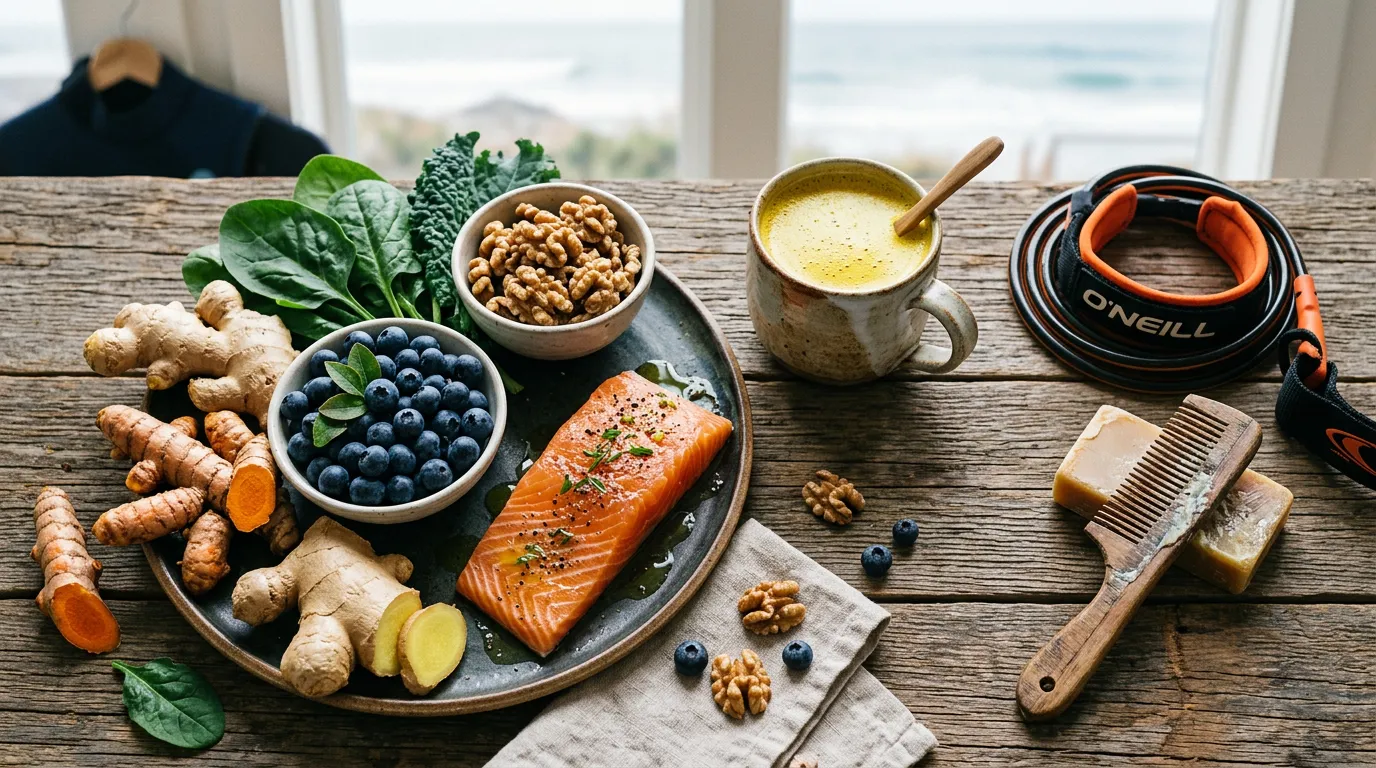
Every surf session creates inflammation. This is not a pathological process but a normal physiological response to the mechanical stress placed on muscles, tendons and joints by paddling, pop-ups, wipeouts and the constant stabilisation work required to ride waves. In small amounts and properly resolved, this exercise-induced inflammation is part of the adaptation process that makes surfers fitter and more capable over time. The problem arises when inflammation becomes chronic, either because the training load exceeds the body’s capacity to recover or because the diet fails to provide the nutritional support that resolution of the inflammatory response requires.
For Irish surfers who surf regularly in cold Atlantic water, the inflammatory burden is higher than for warm water surfers doing equivalent sessions. Cold water immersion activates the stress response and elevates cortisol, a hormone that modulates inflammatory signalling in ways that can prolong recovery if nutritional support is inadequate. Understanding which foods and drinks genuinely support the resolution of exercise-induced inflammation, as opposed to those that merely claim to, allows surfers to make dietary choices that translate directly into better performance and faster recovery between sessions.
Our guide to post-surf drinks and warm beverages for Irish surfers covers the immediate post-session drink strategies that initiate the recovery process. This article looks at the broader dietary picture across the full recovery window.
The science of exercise-induced inflammation and why diet matters
Exercise-induced inflammation follows a predictable timeline. During and immediately after a surf session, pro-inflammatory cytokines including IL-6, IL-1 beta and TNF-alpha are released by muscle fibres experiencing mechanical stress and by immune cells responding to the oxidative stress generated by intense aerobic exercise. This acute inflammatory response peaks within two to six hours of exercise and is followed by a resolution phase during which specialised pro-resolving mediators derived from omega-3 fatty acids direct the return to baseline.
The efficiency of this resolution phase is where diet plays its most significant role. Omega-3 fatty acids, particularly EPA and DHA from marine sources, are the direct precursors of the most potent pro-resolving mediators including resolvins and protectins. A diet rich in EPA and DHA accelerates the resolution of exercise-induced inflammation, reduces post-exercise muscle soreness and improves recovery speed between sessions in ways that are measurable in controlled studies.
The balance between omega-3 and omega-6 fatty acids in the diet is as important as the absolute intake of omega-3. Western diets typically provide omega-6 to omega-3 ratios of 15:1 to 20:1, far above the 4:1 ratio associated with optimal inflammatory regulation. For surfers, shifting this ratio toward omega-3 through regular consumption of fatty fish, walnuts, flaxseed and algae-based supplements while reducing processed seed oil consumption is one of the most evidence-supported dietary interventions for recovery quality.
The most effective anti-inflammatory foods for surfers
Fatty fish, particularly Atlantic salmon, mackerel and herring, are the most direct dietary source of EPA and DHA and the most efficient way to shift the omega-6 to omega-3 ratio toward optimal inflammatory regulation. For Irish surfers, the availability of high-quality Atlantic fish from local fisheries makes this a practical as well as evidence-based recommendation. Two to three servings of fatty fish per week provide sufficient EPA and DHA to meaningfully influence inflammatory resolution in regular exercisers.
Dark leafy greens including kale, spinach and watercress are among the most nutrient-dense anti-inflammatory foods available and are particularly relevant for surfers because of their high magnesium content. Magnesium plays a critical role in muscle relaxation and recovery, and deficiency, which is common in athletes, is associated with increased muscle soreness, poor sleep quality and reduced recovery speed. Irish surfers eating locally grown kale, one of the most cold-tolerant leafy vegetables and a staple of traditional Irish cooking, are accessing a food with significant recovery-supporting nutritional value.
Berries, particularly blueberries, blackberries and blackcurrants, are the most anthocyanin-rich foods commonly available in Ireland and provide the same prebiotic and anti-inflammatory benefits from anthocyanins described in our post-surf drinks guide. A daily serving of mixed berries represents one of the most cost-effective nutritional interventions for reducing exercise-induced oxidative stress and supporting the gut microbiome that is stressed by intense training.
Turmeric and ginger, consumed regularly in food and drinks rather than only immediately post-session, provide cumulative anti-inflammatory effects that build over time. The curcumin in turmeric and the gingerols in ginger both modulate NF-kB activity chronically when consumed regularly, and their effects on baseline inflammatory markers are most pronounced in studies of six weeks or longer, suggesting that the greatest benefits come from consistent daily consumption rather than post-session use alone.
What to avoid if you want to recover faster
The foods and drinks that impair recovery are as important to understand as those that support it. Alcohol is the most significant dietary obstacle to surf recovery for most Irish surfers. The post-session pint is a cultural fixture in Irish surf communities, but alcohol impairs every dimension of recovery: it disrupts sleep architecture, suppresses growth hormone secretion, increases intestinal permeability and directly promotes inflammatory signalling through acetaldehyde toxicity. A single drink after a surf session has measurable effects on recovery quality; regular post-session drinking significantly compounds these effects over time.
Processed seed oils high in omega-6 fatty acids, found in most commercial snack foods, fast food and cheap cooking oils, directly compete with omega-3 fatty acids for the enzymatic pathways that produce pro-resolving mediators. A diet high in these oils shifts the inflammatory balance toward prolonged rather than resolved inflammation and partially negates the benefits of omega-3 supplementation.